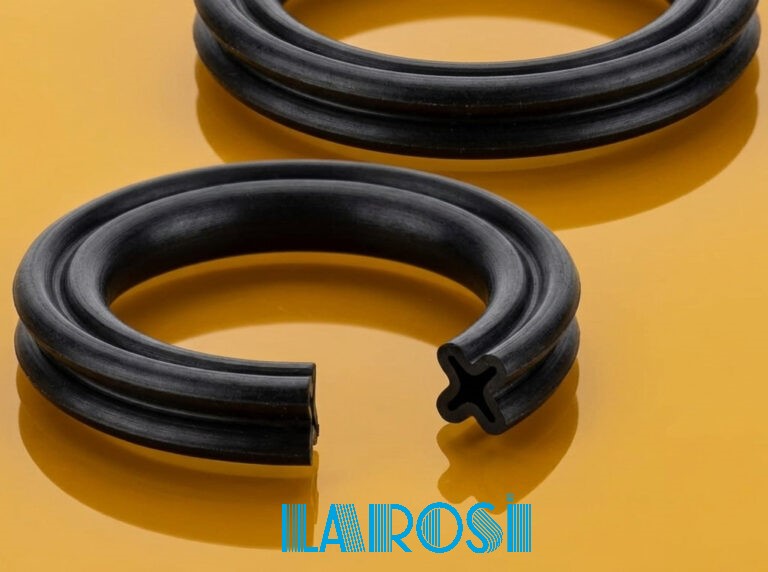
Quadrings (X-Ring/JF4) are robust and reliable seals, but only when selected and installed correctly. In daily practice, seemingly minor errors cause early leaks, accelerated wear and unplanned downtime. From a material incompatible with the fluid to a size off by a tenth of a millimeter, the causes are often simple but systematic. This guide brings together the most frequent problems reported by our clients (workshops, machine builders and resellers) along with practical guidance to solve them before they turn into a real problem on site.
Mistake 1: Choosing the Wrong Material
The most frequent error is using NBR in a system with non-mineral fluids (steam, solvents, glycol). The result is swelling or early degradation of the seal, with leaks appearing within hours of operation.
Solution: always identify the exact fluid before choosing the material.
Mistake 2: Incorrect Size (Wrong Diameter or Thickness)
A quadring with an internal diameter too large will not provide the necessary compression. One that’s too small creates excessive friction and a risk of extrusion. Incorrect thickness is the leading cause of leaks right after installation.
Solution: always measure the groove with a caliper before ordering. Don’t rely on the nominal size of the old product.
Mistake 3: Ignoring the Operating Temperature
Using NBR at +130°C or FKM at -30°C causes the material to lose its elastic properties, leading to a rapid loss of sealing performance.
Solution: always check the actual operating range, including thermal peaks and cold start cycles.
Mistake 4: Replacing a Quadring with an O-Ring Without Verification
X-Rings and O-Rings are not always interchangeable. A groove sized for an X-Ring (in width) can have different dimensions than one designed for an O-Ring of the same diameter, resulting in incorrect compression.
Solution: check the dimensions of the existing groove and choose the correct product for that profile.
Mistake 5: Ordering Without Specifying Hardness
Two NBR X-Rings of the same diameter but different hardness (70 vs 90 Shore A) behave very differently under pressure. 90 Shore is suited for high pressure applications, while 70 Shore works for standard applications with low resistance to movement.
Solution: always specify the required Shore A hardness together with material and dimensions.
Finding the Right Seal, Ready When You Need It
Choosing the correct seal is only half the job. The other half is finding it in stock, in the exact size, within the timeframe your production requires. Larosi holds over 1,000,000 references in stock, including a complete range of quadrings in every material (NBR, FKM/Viton, EPDM, FDA silicone, HNBR, PU, FFKM) and in hundreds of standard and metric sizes, from the smallest diameters to large format dimensions. If your size isn’t in the catalog, we can source it or produce it to specification: just provide us with the internal diameter, thickness and required material.
To learn more about Quadrings, visit the main product page.
Contact us with your technical specifications. Our team responds quickly with availability and pricing, even for urgent orders or limited quantities.
Comments are closed