Larosi supplies manufacturing companies, plant engineers and distributors with polypropylene rods in solid round PP-H ready from stock. The material is among the most economical engineering plastics for equivalent chemical resistance, and is the natural choice when a lightweight, easy-to-machine component that is resistant to moisture or detergents is required.
Those who work in B2B know the problem: buying a format that then turns out to be inconvenient to cut or expensive to ship. That is why our polypropylene rods have a standard length of up to 1 metre, a format that simplifies machining on a lathe or milling machine and reduces transport costs compared to 2 or 3 metre rods.
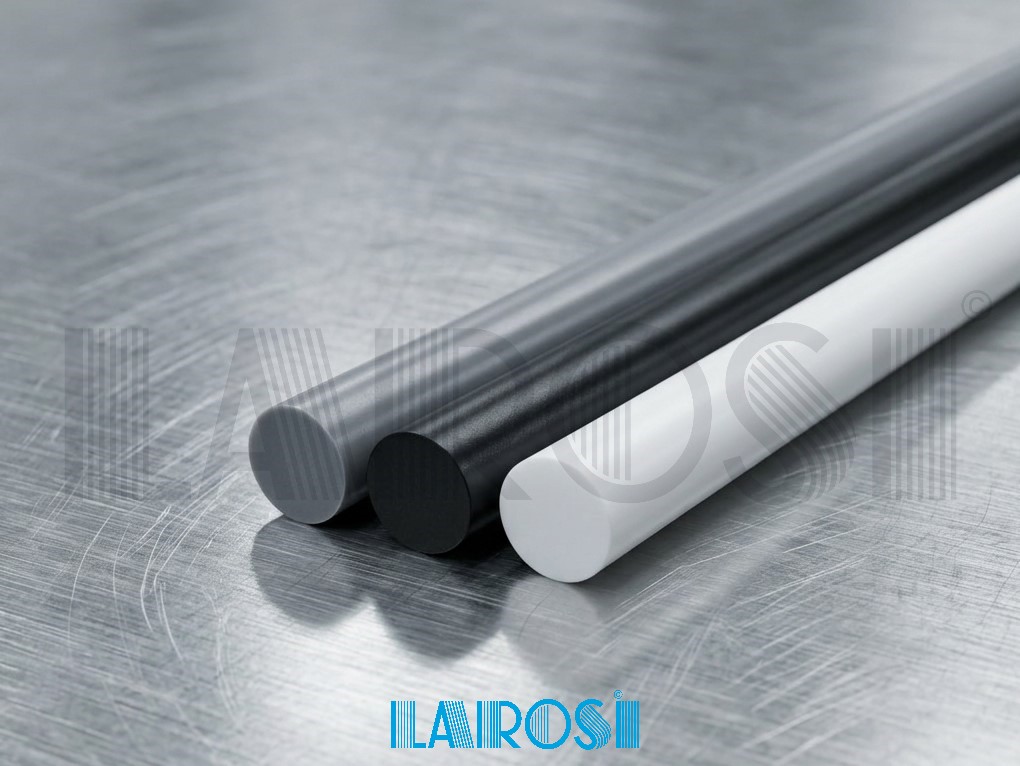
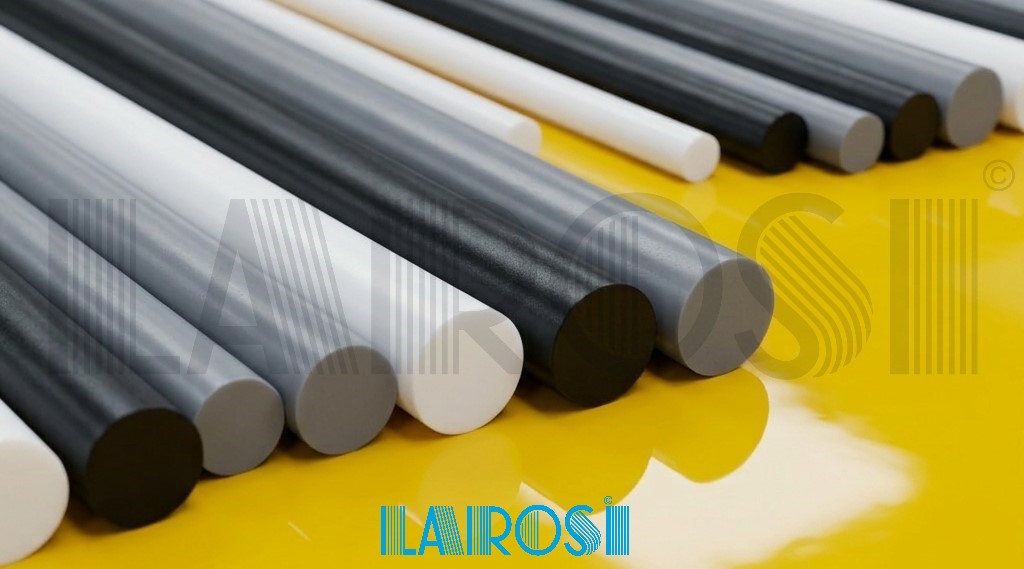
Polypropylene rods are available in Grey, Natural White and Black colours, the three variants most requested by the industrial market and sufficient to cover almost all technical applications.
If the diameter you are looking for is not in the catalogue, we can cut it or source it to specification.
Catalog
Request our Polypropylene Rods catalog of interest to you
Prices
Request prices in € and quotes for Polypropylene Rods
Consulting
Contact us to request consulting from Larosi experts
Colours and format: what is really needed in the workshop
Many suppliers offer dozens of colour variations that in practice are useful for very few projects. Larosi has chosen to focus on the three colours that cover the majority of technical requests:
- Grey: the most widespread standard in industry, suitable for almost all mechanical applications
- Natural white: preferred when an optically neutral material is required, often requested in the food sector
- Black: chosen for visible components or when better light behaviour is required compared to natural white
The same principle applies to length. The format up to 1000 mm is the one most used for the production of small and medium-sized turned or milled parts: bushings, spacers, thick washers, guide elements. Buying a 1-metre rod instead of a 3-metre one avoids paying for material that would remain unused in stock, and reduces transport costs related to oversized shipments.
Where polypropylene rods are used
Round polypropylene rods cover different needs depending on the sector.
General mechanics. Bushings, spacers, rollers and guide elements are made starting from round rod, taking advantage of the material’s ease of turning and milling.
Chemical industry and water treatment. Components in contact with aggressive substances, where good resistance to dilute acids and alkalis is required without the cost of a higher-performance engineering plastic.
Food industry. Parts in contact with moisture or detergents, where natural white is often preferred for hygienic reasons [confirm availability of grades certified for food contact].
Ventilation and plant engineering. Lightweight components where the low specific gravity of PP reduces the overall load of the structure compared to other engineering plastics.
Resellers and distributors. If you resell technical components, we work with you on scheduled supplies and custom cuts according to the requests of your end customers.
Advantages of polypropylene
Polypropylene remains one of the most widely used engineering plastics in industry for a simple reason: it combines good performance with a contained cost.
- Low specific gravity: approximately 0.90 kg/dm³, among the lightest of common engineering plastics
- Chemical resistance: good behaviour with dilute acids and alkalis, both dilute and concentrated
- Machinability: well suited to turning, milling and drilling, with reduced machining times
- Weldability: can be welded with relative ease, useful for repairs or assemblies
- Low water absorption: maintains dimensional stability even in humid environments
It should be borne in mind that polypropylene loses mechanical strength below zero and is attacked by concentrated acids and some organic solvents. For these specific conditions other engineering plastics in our range may be more suitable, such as PE HDPE or PTFE.
Why choose Larosi for polypropylene rods
For over fifty years we have been supplying technical components and semi-finished materials to the B2B market. For polypropylene rods we make available:
- immediate availability on the most requested diameters
- custom cutting according to customer specifications
- fast shipping via the main national couriers
- technical support for identifying the product most suitable for the project
We process every rod with the same automatic vertical panel saw Putsch Meniconi SVP 145 used for our polypropylene sheets, with digital reading of dimensions and precision in the order of hundredths of a millimetre.
Frequently asked questions
What is the difference between grey, white and black polypropylene rods?
The main difference is aesthetic and to a lesser extent related to light behaviour. The mechanical and chemical properties of the material remain substantially the same in the three colours. Grey is the industrial standard, natural white is often requested in the food sector, black is chosen for visible components.
Why is the maximum length 1 metre and not 2 or 3?
The 1-metre format is designed for those who machine small and medium-sized parts. It avoids purchasing excess material and reduces transport costs related to oversized shipments, typical of longer rods.
Is it possible to have polypropylene rods cut to size?
Yes. We work with custom dimensions according to customer specifications, both for single orders and for scheduled supplies to resellers and distributors.
Do polypropylene rods resist chemical agents?
Polypropylene resists dilute acids and alkalis well, both dilute and concentrated. Attention must be paid to contact with concentrated acids and organic solvents, which can attack the material.
How long does it take for polypropylene rods to be shipped?
Thanks to the stock in the warehouse, we handle fast shipping via the main national couriers, both for recurring orders and for urgent requests linked to production deadlines.
{ “@context”: “https://schema.org”, “@type”: “FAQPage”, “mainEntity”: [ { “@type”: “Question”, “name”: “What is the difference between grey, white and black polypropylene rods?”, “acceptedAnswer”: { “@type”: “Answer”, “text”: “The main difference is aesthetic and to a lesser extent related to light behaviour. The mechanical and chemical properties of the material remain substantially the same in the three colours. Grey is the industrial standard, natural white is often requested in the food sector, black is chosen for visible components.” } }, { “@type”: “Question”, “name”: “Why is the maximum length 1 metre and not 2 or 3?”, “acceptedAnswer”: { “@type”: “Answer”, “text”: “The 1-metre format is designed for those who machine small and medium-sized parts. It avoids purchasing excess material and reduces transport costs related to oversized shipments, typical of longer rods.” } }, { “@type”: “Question”, “name”: “Is it possible to have polypropylene rods cut to size?”, “acceptedAnswer”: { “@type”: “Answer”, “text”: “Yes. We work with custom dimensions according to customer specifications, both for single orders and for scheduled supplies to resellers and distributors.” } }, { “@type”: “Question”, “name”: “Do polypropylene rods resist chemical agents?”, “acceptedAnswer”: { “@type”: “Answer”, “text”: “Polypropylene resists dilute acids and alkalis well, both dilute and concentrated. Attention must be paid to contact with concentrated acids and organic solvents, which can attack the material.” } }, { “@type”: “Question”, “name”: “How long does it take for polypropylene rods to be shipped?”, “acceptedAnswer”: { “@type”: “Answer”, “text”: “Thanks to the stock in the warehouse, we handle fast shipping via the main national couriers, both for recurring orders and for urgent requests linked to production deadlines.” } } ] }Cerchi Barre Polipropilene in Italia? Visita Larosi.it