Food-grade high-density polyethylene — commonly referred to as food-grade PE HDPE — is a thermoplastic engineering polymer produced from the monomer ethylene, with a high-density molecular structure that gives it superior rigidity, compactness, and barrier properties compared to standard grades.
What distinguishes food-grade PE HDPE from other grades of the same material is not its basic chemical formulation, but the purity of the raw materials used in production and the absence of additives, colorants, or fillers that could migrate upon contact with food. The result is an inert, non-toxic, and odorless material that does not alter the organoleptic characteristics of the foods it comes into contact with—neither at room temperature nor in the presence of moisture, fats, or organic acids typical of processed foods.
Reference Standards: EC 1935/2004 and FDA Regulations
In Europe, the use of food contact materials is governed by Regulation (EC) No 1935/2004, which establishes general safety requirements for all materials and articles intended to come into contact with food, and by Regulation (EU) No 10/2011 on plastic materials. Food-grade PE HDPE complying with these regulations must pass overall and specific migration tests, which verify the quantity of substances transferred to food simulants under controlled time and temperature conditions.
In the United States, the regulatory reference is the FDA (Food and Drug Administration), which regulates polymers permitted for food contact under the Code of Federal Regulations (21 CFR).
Compliance with these standards is not an optional requirement: for manufacturers of food industry machinery, professional kitchen equipment, or components for HACCP systems, using certified materials is a legal obligation and a guarantee of accountability toward the end-user.
Technical Properties Making It Ideal for the Food Industry
Beyond regulatory compliance, food-grade PE HDPE is chosen by engineers for a range of mechanical and physical properties that adapt perfectly to the typical operating conditions of food processing plants:
- Excellent Chemical Resistance: Highly resistant to acids, alkalis, solvents, and industrial detergents—including sanitizing solutions and chlorinated products commonly used in CIP (Clean-in-Place) procedures.
- Hygienic Surface: The non-porous, low-friction surface prevents the accumulation of organic residue, making cleaning quick and effective even in environments subject to frequent washdown cycles.
- Wide Temperature Range: The material withstands continuous operating temperatures ranging from –50°C to +80°C, with short peaks up to +100°C—a range that covers most food processing stages, from refrigeration to pasteurization.
- High Impact Resistance: Outstanding durability even at low temperatures, making it highly reliable in refrigerated environments where other polymeric materials tend to become brittle.
Practical Applications: Where Food-Grade Polyethylene is Used
Applications for food-grade PE HDPE span the entire food production and processing supply chain:
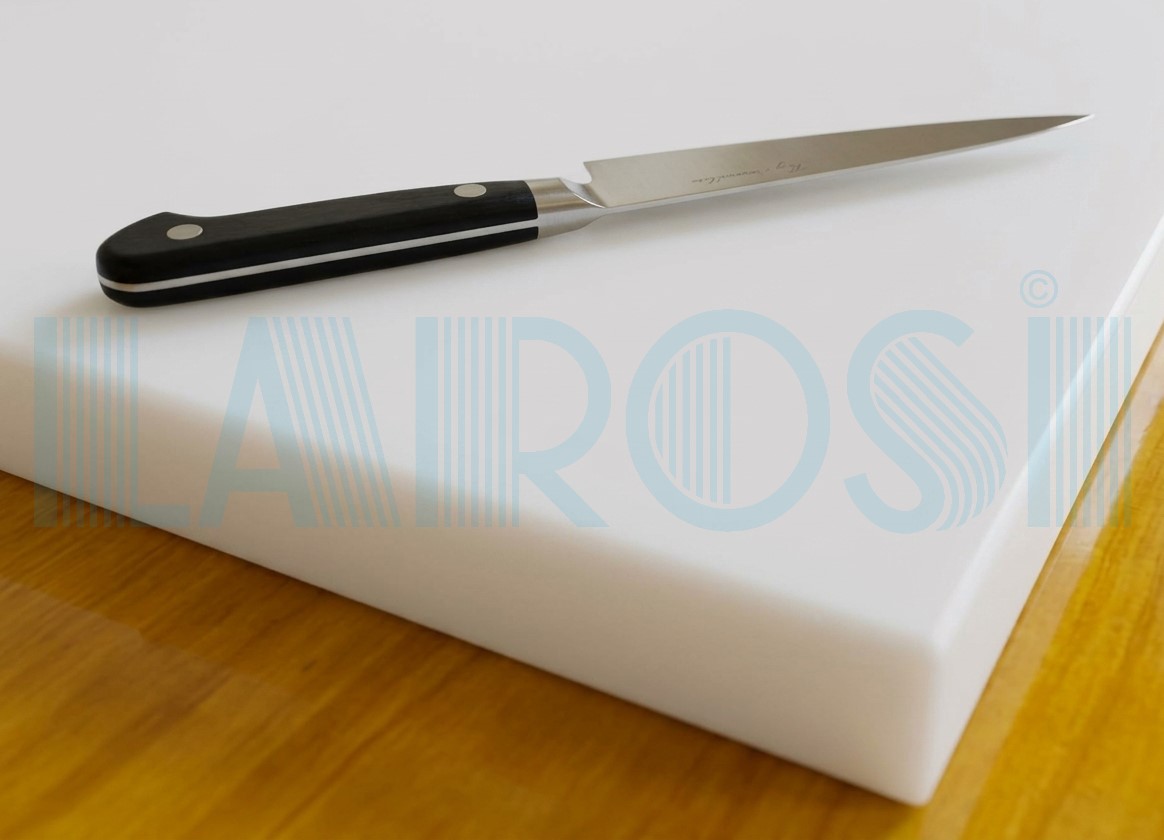
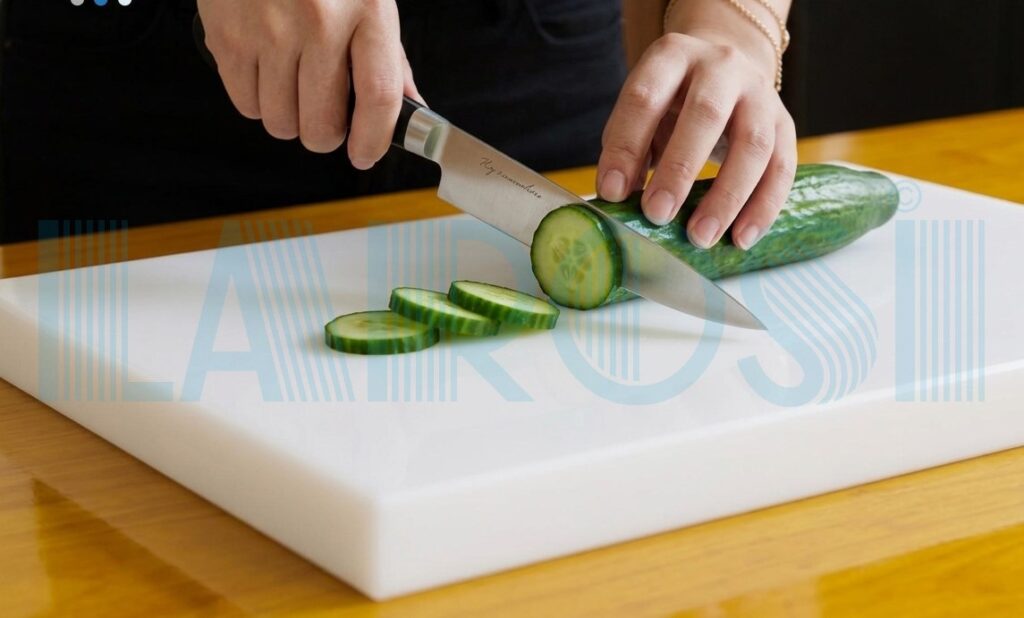
- Meat and Poultry Processing: White PE HDPE sheets are widely used for cutting boards, dividers, and work equipment supports, replacing wood, which is porous and difficult to sanitize.
- Seafood Industry: These same sheets are used as internal linings for tanks, drainage channels, and contact surfaces.
- Food Production Machinery: For manufacturers of machinery handling dairy, fresh pasta, and baked goods, round and square PE HDPE bars are machined to produce bushings, gears, guides, and spacers for moving parts in direct or indirect contact with food.
- Conveyor and Packaging Systems: The sheets are utilized as conveyor side guides, deflectors, chutes, and low-friction liners for sliding surfaces.
In all these contexts, the main advantage over other engineering plastics is the combination of ease of processing and widespread availability.
PE HD 300, PE HD 500, or PE HD 1000: Which Grade to Choose for Food Applications
Not all high-density polyethylene grades are equal in terms of performance, and choosing the correct grade directly impacts the component’s lifespan and its suitability for the intended application.
- PE HD 300: This is the entry-level grade, produced by extrusion. It offers good flexibility, easy machinability, and a cost-effective price point, making it suitable for low-stress applications such as cutting boards, dividers, and protective linings.
- PE HD 500: Produced by compression molding, this grade is denser and more wear-resistant than PE HD 300, offering a higher load-bearing capacity. It is the ideal choice for guide rails and components subjected to continuous friction.
- PE HD 1000 (UHMWPE): This represents the ultra-high-molecular-weight grade. It features top-tier abrasion resistance for this class of materials, an extremely low coefficient of friction, and the ability to absorb repeated impacts without deforming.
In the food industry, the natural (white) version of PE HD 1000 is often preferred for machinery components under high mechanical stress, where frequent part replacement would cause unacceptable production downtime. All three grades are available in the Larosi Srl catalog as food-grade options made from virgin natural white material.
Purchasing Food-Grade PE HDPE from Larosi Srl: Availability and Delivery Times
Larosi Srl supplies semi-finished food-grade PE HDPE products to retailers, technical distributors, and machinery manufacturers throughout Italy and Europe, with shipping via FedEx express courier and dedicated tracking for every order.
The Padova warehouse ensures immediate availability of the most requested formats:
- Sheets in core thicknesses ranging from 10 to 100 mm
- Round bars in standard diameters
- Custom cut-to-size options for orders requiring non-standard dimensions
Businesses operating on a project basis or managing recurring requests can arrange continuous supply terms with our sales department. With over 50 years of experience in distributing industrial technical components and an inventory exceeding one million items, Larosi Srl provides clients with fast, reliable access to a product range rarely matched in the European distribution landscape.
To view the full range of food-grade PE HDPE sheets and bars, visit the dedicated product page or contact our Padova offices directly for a personalized quote.
Comments are closed